
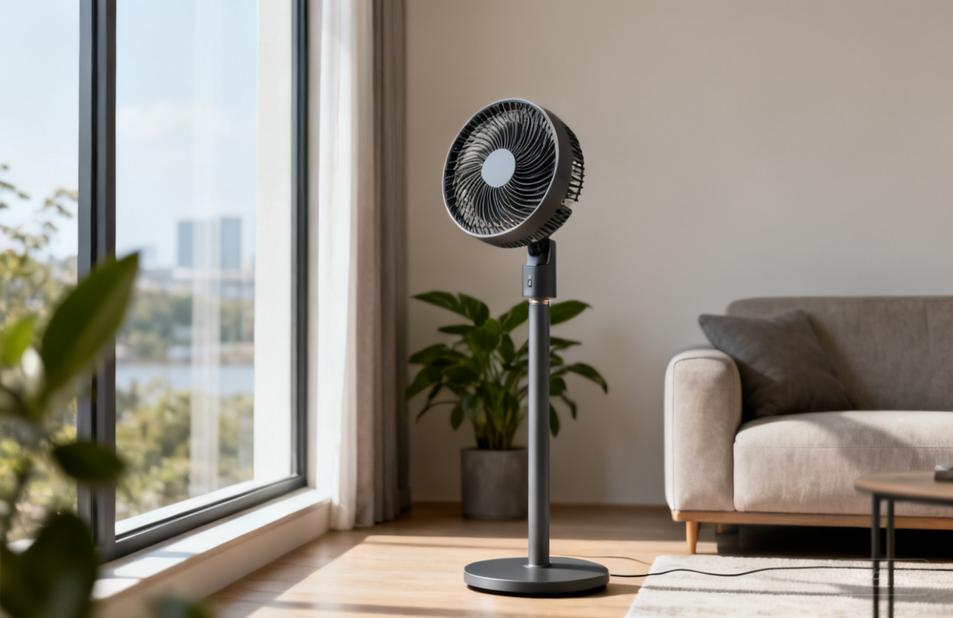
A standing air circulator OEM manufacturer produces pedestal-style air circulators to a buyer’s specifications, including custom branding, packaging, and sometimes performance modifications. These manufacturers serve distributors, retailers, and commercial buyers who need private-label or customized products for their markets.
What Is a Standing Air Circulator OEM Manufacturer?
An OEM (original equipment manufacturer) in this context is a factory that builds air circulators according to your design and brand requirements. Unlike a simple trading company, an OEM manufacturer typically has in-house production capabilities, such as motor assembly, fan blade production, and housing fabrication. They can customize products beyond logo printing—for example, adjusting fan speed settings, oscillation angles, or control interfaces—subject to engineering feasibility and minimum order quantities.
Standing air circulators (also called pedestal air circulators) are distinguished from standard pedestal fans by their focus on directional airflow and air circulation, often featuring deeper fan blades or shrouds designed to project air over longer distances. OEM projects may involve modifying these characteristics, but buyers should confirm what is actually adjustable without compromising safety or performance.
Why Work with an OEM Manufacturer Instead of a Trading Company?
Working directly with an OEM manufacturer can offer advantages in customization, quality control, and communication. You can discuss technical details directly with the people who build the product, potentially reducing misunderstandings and enabling faster problem-solving. However, not all factories are set up for OEM work; some may only offer limited options. A trading company might provide more flexibility in sourcing multiple product types but less control over production specifics.
Key considerations when deciding:
- Customization depth: Can the manufacturer modify electrical specifications (voltage, plug type), motor performance, or physical design? Or do they only offer logo and packaging changes?
- Communication: Do they have English-speaking staff or a process for handling technical queries and documentation?
- Quality systems: Are there documented inspection procedures and testing protocols?
- Minimum order quantity (MOQ): OEM projects often have higher MOQs than stock items; confirm what applies to your customization.
How to Evaluate a Standing Air Circulator OEM Manufacturer
Use a structured approach to separate capable manufacturers from those that merely claim OEM capability.
1. Verify Core Manufacturing Capabilities
Ask for a factory profile that includes production processes, key equipment, and in-house vs. outsourced components. A manufacturer that produces its own motors and fan blades may have better control over quality and lead times, but this is not mandatory. Request a video tour or, if feasible, an in-person audit.
2. Assess Customization Options and Engineering Support
Provide a clear specification of what you want to customize. Typical OEM customizations include:
- Branding: logo on product and packaging
- Packaging: retail box design, manuals, inserts
- Electrical: voltage, frequency, plug type, power cord length
- Controls: mechanical or remote control, speed settings
- Appearance: housing color, grill design, base style
Ask whether these changes affect certification or require new tooling, and what the associated costs and timelines are. A manufacturer with in-house engineering can propose alternatives if your initial request is impractical.
3. Review Quality Assurance and Testing
Quality systems vary. Ask about:
- Incoming material inspection
- In-process checks (e.g., motor performance, balance, electrical safety)
- Final inspection procedures and sampling plans
- Reliability testing (e.g., life cycle, drop test) if available
Request test reports for relevant standards, such as electrical safety and electromagnetic compatibility, for the specific models you are considering. Note that certifications are model-specific and must be verified for your exact configuration.
4. Confirm Compliance and Certification Support
If you sell in regulated markets (e.g., EU, North America), the product must meet applicable directives and standards. An experienced OEM manufacturer should understand these requirements and can often provide existing certificates or facilitate testing. Clarify who is responsible for certification: the factory, you as the importer, or a third party.
5. Evaluate Communication and Project Management
Poor communication is a common source of delays. Test responsiveness during the inquiry stage. Ask for a sample project timeline and identify key contacts. A manufacturer that provides clear documentation—such as specification sheets, packaging artwork templates, and approval processes—is likely more reliable for OEM work.
6. Understand MOQ, Lead Times, and Pricing Structure
MOQs and lead times vary widely based on customization and order volume. Request a written quotation that itemizes product cost, customization fees (e.g., tooling, setup), packaging, and certification costs if applicable. Be wary of quotes that seem unusually low without explanation; they may omit important costs or indicate lower-quality components.
Information to Send to a Potential OEM Manufacturer
To get an accurate response, prepare a brief that includes:
- Product type: standing air circulator, with desired size (e.g., 16-inch, 18-inch) and airflow characteristics
- Target market and applicable regulations
- Electrical specifications: voltage, frequency, plug type
- Customization requirements: logo, packaging, color, controls
- Estimated order quantity and expected annual volume
- Delivery timeline and destination port
- Any required certifications or test reports
Providing clear information upfront reduces back-and-forth and helps the manufacturer quote accurately.
Common Limitations and Trade-offs
OEM projects involve trade-offs. Custom tooling or engineering changes increase upfront costs and lead times. High MOQs may be required to justify customization. Not all factories can accommodate every request; some may subcontract certain processes, which can affect quality control. Additionally, certifications add cost and time, and the manufacturer may not cover all markets. Buyers should balance customization against budget and timeline constraints.
Buyer Checklist
Use this checklist to guide your evaluation:
- Factory capabilities verified (production processes, in-house vs. outsourced)
- Customization options confirmed with engineering feasibility
- Quality assurance procedures reviewed
- Certification support clarified (who is responsible, which standards)
- Communication responsiveness tested
- MOQ, lead time, and pricing structure documented
- Sample evaluation completed before mass production
- Intellectual property and confidentiality agreements in place if needed
Selecting a standing air circulator OEM manufacturer requires due diligence. Focus on verifiable capabilities, clear communication, and a shared understanding of specifications and compliance. This approach reduces risk and supports a smoother OEM project.
Frequently Asked Questions
What is the difference between an OEM and ODM manufacturer for standing air circulators?
An OEM manufacturer builds products to your specifications and brand, while an ODM manufacturer designs and develops products that you can brand. OEM typically requires you to provide detailed specifications, whereas ODM offers ready-made designs with customization options.
What customization options are common for standing air circulator OEM projects?
Common options include logo printing, custom packaging, voltage and plug type changes, color modifications, and control interface adjustments. The extent of customization depends on the manufacturer's capabilities and may require tooling or engineering changes.
How do I verify the quality of a standing air circulator from an OEM manufacturer?
Request detailed test reports for electrical safety and performance, ask about quality control procedures, and order samples for evaluation. Factory audits or video tours can also provide insight into production standards.
What information should I provide to get an accurate OEM quotation?
Provide product specifications (size, airflow, voltage), customization requirements, target market and certifications, estimated order quantity, delivery timeline, and destination. Clear details help the manufacturer quote accurately and avoid misunderstandings.
Are certifications transferable if I customize a standing air circulator?
Certifications are typically model-specific and may not remain valid after modifications. You should confirm with the manufacturer and certification body whether changes affect compliance and if new testing is required.
Company Information and Technical Inquiries
Company: Dongguan Yanxuan Electrical Appliances Co., Ltd.
Address: No. 3, Liuhua Industrial Road, Dongcheng Subdistrict, Dongguan, Guangdong, China
Phone: +8613253611781
Email: 847317465@qq.com