
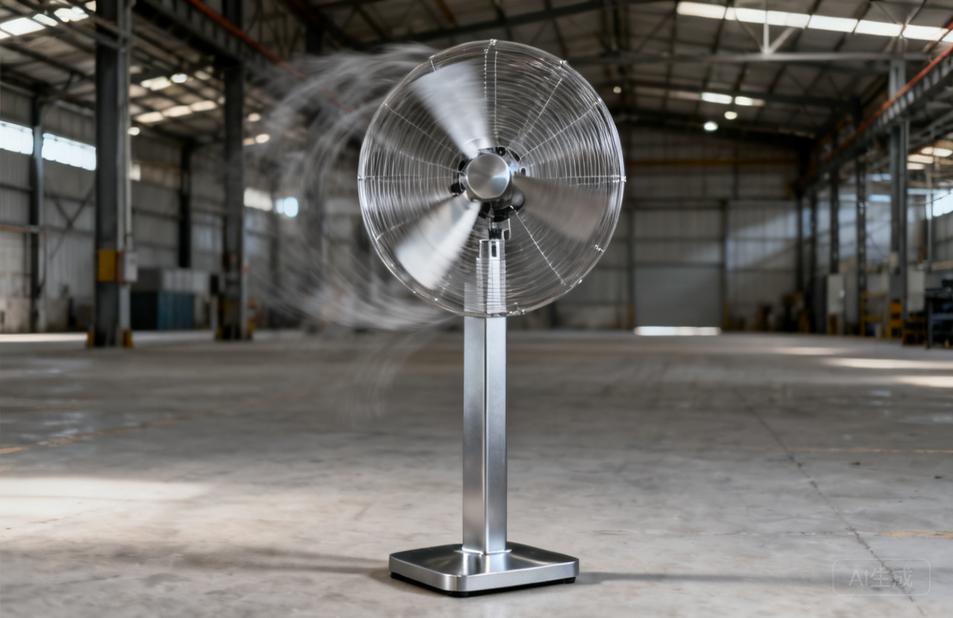
A standing air circulator wholesale supplier is a company that supplies pedestal-style air circulators in bulk to distributors, retailers, and commercial buyers. These circulators are used to move air efficiently in large spaces such as warehouses, workshops, and gyms. Buyers should evaluate suppliers on product specifications, certifications, OEM/ODM capabilities, and quality control processes.
What Is a Standing Air Circulator?
A standing air circulator, also known as a pedestal air circulator, is a floor-standing fan designed to produce a focused, high-velocity airflow. Unlike conventional fans that provide localized cooling, air circulators are engineered to move air over longer distances, improving air circulation and ventilation in large or enclosed spaces. They typically feature a sturdy base, adjustable height, and a tilting head to direct airflow.
Common applications include industrial workshops, warehouses, gymnasiums, agricultural facilities, and commercial spaces. The primary use is to enhance air movement, which can help with temperature equalization and humidity control when used alongside ventilation systems.
Key Considerations When Selecting a Wholesale Supplier
When sourcing standing air circulators in bulk, buyers should look beyond price and evaluate the supplier’s ability to deliver consistent quality, meet regulatory requirements, and support customization. The following factors are critical.
Product Specifications and Performance
Request detailed datasheets for each model. Key parameters include:
- Airflow volume (CFM or m³/h): Determines the circulator’s ability to move air. Match airflow to the size and layout of the intended space.
- Fan diameter and blade design: Influences airflow pattern and efficiency.
- Motor type and power: AC or DC motors have different efficiency and speed control characteristics. Verify voltage and frequency compatibility with target markets.
- Speed settings and control: Options may include mechanical switches, remote control, or variable speed drives.
- Noise level: Important for applications where low noise is required, such as gyms or offices.
- Construction materials: Housing and blade materials affect durability and corrosion resistance.
- IP rating: If the circulator will be used in dusty or humid environments, confirm the ingress protection rating.
Specifications vary by model and manufacturer. Always confirm the final specifications in the product datasheet before ordering.
Certifications and Compliance
Depending on the destination market, standing air circulators may require certifications such as CE, RoHS, UL, or ETL. Ask the supplier for valid certificates and test reports from recognized laboratories. Verify that the certificates cover the exact models you plan to import. Be cautious of suppliers who cannot provide documentation or whose certificates are outdated.
OEM and ODM Capabilities
If you need private label or custom-designed circulators, assess the supplier’s engineering and production flexibility. Inquire about:
- Custom logo and packaging options
- Ability to modify motor, blade, or control configurations
- Minimum order quantities for customized models
- Design and prototyping services for ODM projects
Request examples of previous OEM/ODM work, if available, and clarify intellectual property arrangements.
Quality Control and Manufacturing Standards
A reliable supplier should have documented quality management processes. Ask about:
- Incoming material inspection
- In-process quality checks
- Final product testing (e.g., performance, safety, and endurance tests)
- Packaging and drop-testing procedures
Consider requesting a pre-shipment inspection or factory audit by a third party. This helps verify that production consistency meets your requirements.
Production Capacity and Lead Times
Understand the supplier’s production capacity and typical lead times for bulk orders. While specific lead times depend on order volume and customization, a supplier with adequate capacity can help you meet seasonal demand. Ask for a production schedule and confirm whether they can accommodate rush orders.
After-Sales Support and Spare Parts
Clarify the warranty terms and availability of spare parts such as blades, motors, and switches. For wholesale buyers, access to spare parts is essential for supporting end customers and reducing downtime.
Applications and Suitability
Standing air circulators are suitable for a range of commercial and industrial settings. However, they may not be ideal for every environment. Consider the following:
- Large open spaces: Circulators can help distribute air in warehouses, factories, and sports halls. For very large areas, multiple units may be needed.
- High humidity or dusty environments: Choose models with appropriate IP ratings and corrosion-resistant materials.
- Noise-sensitive areas: Verify noise levels and consider models with low-noise blades or variable speed control.
- Outdoor use: Standard indoor circulators are not designed for outdoor exposure. If outdoor use is required, confirm the model’s suitability and protection rating.
Limitations include the need for a power source, potential obstructions to airflow, and the fact that air circulators do not cool air by themselves—they improve air movement and can enhance the effect of ventilation or evaporative cooling systems.
What to Send to a Supplier
To get accurate quotations and proposals, prepare a clear brief that includes:
- Target market and required certifications
- Desired specifications (airflow, fan size, voltage, control type)
- Order quantity and expected delivery timeline
- OEM/ODM requirements (logo, packaging, custom features)
- Any special packaging or labeling needs
- Quality inspection requirements
Providing detailed information helps suppliers respond efficiently and reduces the risk of misunderstandings.
Buyer Checklist
Use this checklist to evaluate potential suppliers:
- ☐ Request product datasheets and verify key specifications
- ☐ Confirm certifications and request test reports
- ☐ Ask about OEM/ODM capabilities and minimum order quantities
- ☐ Review quality control processes and request a factory audit
- ☐ Clarify lead times, production capacity, and after-sales support
- ☐ Obtain samples for evaluation before placing a bulk order
- ☐ Check references or past export experience, if available
Conclusion
Selecting a standing air circulator wholesale supplier requires a structured approach. By focusing on product specifications, certifications, customization options, and quality assurance, buyers can reduce risk and build a reliable supply chain. Always verify information through documentation and samples, and maintain clear communication with the supplier throughout the process.
Frequently Asked Questions
What is the difference between a standing air circulator and a regular fan?
A standing air circulator is designed to produce a focused, high-velocity airflow to move air over longer distances, while a regular fan typically provides localized cooling with lower airflow velocity. Circulators are often used for ventilation and air movement in larger spaces.
Which certifications should a standing air circulator have for export?
Certification requirements depend on the destination market. Common certifications include CE and RoHS for the EU, and UL or ETL for North America. Always request valid certificates and test reports from the supplier.
Can I customize a standing air circulator with my logo?
Many wholesale suppliers offer OEM/ODM services, including custom logos and packaging. Discuss your requirements and confirm minimum order quantities and any additional costs.
What information should I provide to get an accurate quote?
Provide target market, required certifications, desired specifications (airflow, fan size, voltage, control type), order quantity, delivery timeline, and any customization needs. This helps suppliers offer accurate pricing and proposals.
How do I verify the quality of standing air circulators before bulk ordering?
Request product samples, review test reports, and consider a third-party factory audit or pre-shipment inspection. Check the supplier’s quality control processes and ask for references if available.
Company Information and Technical Inquiries
Company: Dongguan Yanxuan Electrical Appliances Co., Ltd.
Address: No. 3, Liuhua Industrial Road, Dongcheng Subdistrict, Dongguan, Guangdong, China
Phone: +8613253611781
Email: 847317465@qq.com